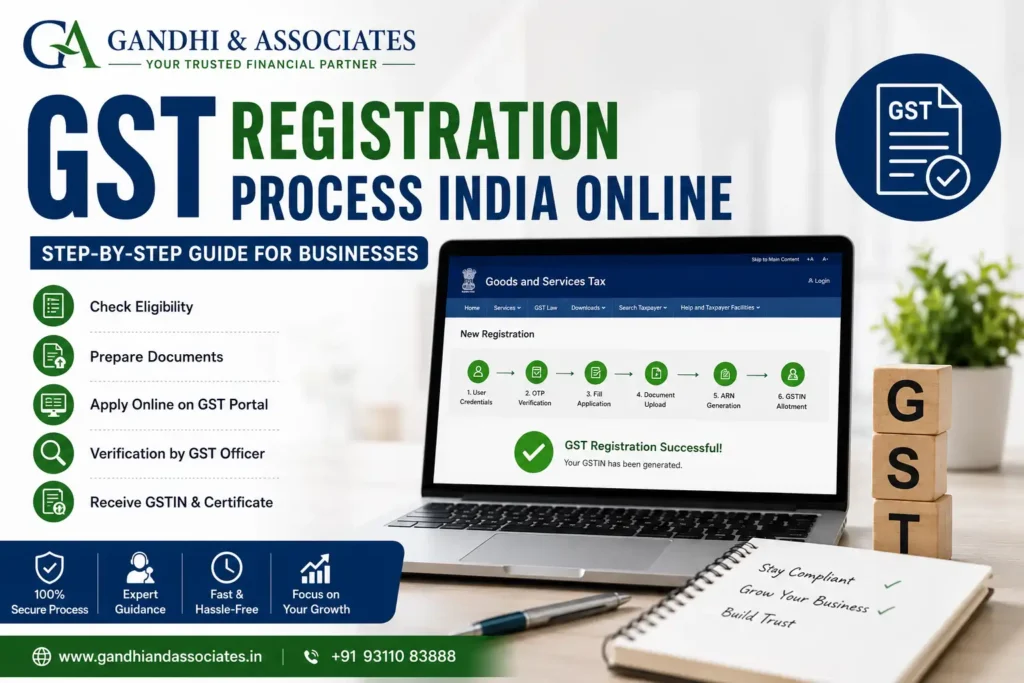
Starting a business in India comes with paperwork. Plenty of it, actually. One of the most important registrations for many businesses today is GST registration.
Whether you run a small online store, provide freelance services, or operate a growing company, understanding the GST registration process in India online is essential. Without proper registration, businesses may face penalties, compliance issues, and unnecessary operational problems later.
The good news? The registration process has become far more streamlined than it was a few years ago.
This guide explains everything you need to know about online GST registration in India—from eligibility and required documents to step-by-step filing instructions and common mistakes to avoid.
What Is GST Registration?
GST (Goods and Services Tax) is an indirect tax system introduced in India to simplify multiple taxes into a single structure.
Businesses registered under GST receive a unique GSTIN (Goods and Services Tax Identification Number). This number allows them to:
- Collect GST from customers
- Claim input tax credit
- File GST returns legally
- Conduct business across India more smoothly
The GST system is regulated by the Goods and Services Tax Council and administered through the official GST portal.
Read This: Income Tax Filing Online India
Who Needs GST Registration in India?
Not every business must register immediately. However, registration becomes mandatory under certain conditions.
Businesses That Usually Require GST Registration
Businesses Exceeding Turnover Limits
According to the official GST framework, businesses crossing prescribed turnover thresholds must register for GST.
Threshold limits may vary based on:
- State category
- Nature of business
- Goods or services supplied
Always verify the latest limits through the Central Board of Indirect Taxes and Customs because rules occasionally change.
E-Commerce Sellers
Businesses selling through platforms like:
- Amazon
- Flipkart
- Meesho
generally require GST registration regardless of turnover in many cases.
Interstate Suppliers
If your business supplies goods or services across state borders, GST registration may become mandatory depending on business type and applicable rules.
Casual Taxable Persons
Temporary business operations such as exhibitions or seasonal stalls may also require registration.
Benefits of GST Registration
Many small businesses delay registration because they assume it only increases paperwork. That’s not fully true.
Proper GST registration offers several advantages.
Legal Recognition
Registered businesses appear more trustworthy to clients and vendors.
Honestly, many companies hesitate to work with unregistered vendors now.
Input Tax Credit (ITC)
Businesses can claim tax credits on eligible purchases and expenses.
This helps reduce overall tax burden.
Easier Business Expansion
GST registration simplifies interstate business transactions and online selling.
Better Loan and Funding Opportunities
Financial institutions and investors often prefer businesses with proper tax compliance records.
Because paperwork may be boring, but banks absolutely love it.
Documents Require for GST Registration Online
Preparing documents properly makes the registration process smoother.
For Proprietorship Businesses
Typically required:
- PAN card
- Aadhaar card
- Address proof
- Bank account details
- Photograph
For Companies and LLPs
Additional documents may include:
- Certificate of incorporation
- MOA/AOA
- Board resolution
- Digital Signature Certificate (DSC)
Business Address Proof
Accepted documents may include:
- Electricity bill
- Rent agreement
- Property tax receipt
Ensure documents remain clear and updated. Blurry uploads create unnecessary delays more often than people expect.
GST Registration Process India Online: Step-by-Step Guide
Now let’s go through the actual online GST registration process.
Step 1: Visit the GST Portal
Go to the official GST portal managed by the Government of India.
Create a temporary registration using:
- PAN number
- Mobile number
- Email ID
OTP verification completes the first stage.
Step 2: Generate Temporary Reference Number (TRN)
After verification, the system generates a Temporary Reference Number.
This TRN helps you continue the application later if needed.
Step 3: Fill GST Registration Application
The GST application includes multiple sections.
You’ll need to provide:
- Business details
- Promoter information
- Business activity type
- Bank account information
- Authorized signatory details
Take your time here.
Many GST application rejections happen because applicants rush through forms carelessly.
Step 4: Upload Documents
Upload scanned copies of required documents.
Ensure:
- Documents are readable
- File size matches requirements
- Names match official records
Even small mismatches sometimes trigger clarification notices.
Step 5: Verification and Authentication
Businesses may authenticate applications through:
- Aadhaar authentication
- Digital Signature Certificate
- EVC verification
Authentication requirements differ based on entity type.
Step 6: ARN Generation
After submission, an Application Reference Number (ARN) is generated.
You can track application status using this ARN.
Step 7: GST Officer Verification
The department reviews submitted information.
If clarification is required, the officer may issue a notice requesting additional documents or corrections.
Respond quickly to avoid delays.
Step 8: GSTIN Allotment
Once approved, the business receives:
- GSTIN number
- GST registration certificate
You can download the certificate directly from the portal.
Read This: How to Save Tax Under 80C in India
How Long Does GST Registration Take?
If documents are accurate and Aadhaar authentication succeeds, GST registration may complete within several working days.
However, delays can occur because of:
- Incorrect documents
- Verification mismatch
- Department clarification requests
Patience helps here. Government portals occasionally have their own mood swings too.
Common GST Registration Mistakes to Avoid
Many businesses face delays because of avoidable errors.
Incorrect PAN Information
PAN details must exactly match Income Tax records.
Even spelling issues can cause rejection.
Wrong Business Classification
Selecting the wrong business activity or entity type creates compliance complications later.
Poor Quality Document Uploads
Unreadable files remain one of the biggest reasons for notices.
Use clear scanned copies instead of random cropped phone screenshots whenever possible.
Ignoring Notices
Applicants sometimes forget to check portal updates after submission.
Missed notices may lead to application rejection.
GST Registration for Freelancers and Online Businesses
Freelancers often assume GST only applies to large companies. Not necessarily.
Many freelance professionals providing:
- Digital marketing services
- Web development
- Content writing
- Consulting services
may require GST registration depending on turnover and client structure.
Online businesses and e-commerce sellers frequently require registration as well.
GST Registration Fees in India
The government does not charge a standard fee for GST registration itself through the official portal.
However:
- Professional consultancy fees may apply if hiring experts
- DSC costs may apply for companies and LLPs
Be cautious of fake websites charging unnecessary registration fees.
Is GST Registration Mandatory for Small Businesses?
Not always.
Small businesses operating below applicable turnover thresholds may not need mandatory registration unless:
- Selling interstate
- Operating through e-commerce platforms
- Falling under compulsory registration categories
Voluntary registration is also possible for businesses wanting input tax credit or better business credibility.
Can GST Registration Be Cancelled?
Yes.
Businesses may apply for GST cancellation if:
- Operations close permanently
- Turnover falls below threshold
- Business structure changes
However, proper return filing and compliance must continue until cancellation approval.
Why Professional Guidance Matters
GST compliance may look straight-forward initially, but small mistakes can create bigger tax complications later.
Professional assistance helps businesses:
- Avoid registration errors
- Understand compliance requirements
- File accurate returns
- Handle notices properly
At https://gandhiandassociates.in/, businesses receive practical guidance for GST registration, compliance support, and tax-related assistance tailored to Indian business requirements.
Because solving tax problems early is much cheaper than fixing them later.
Usually far cheaper.
Final Thoughts
Final Thoughts
The GST registration process in India online has become faster and more accessible than before. However, accuracy still matters at every step.
Before applying, make sure you:
- Keep documents ready
- Verify business information carefully
- Understand your GST obligations
- Respond quickly to notices if issued
Additionally, businesses should regularly check portal updates to avoid missing important notifications.
GST registration isn’t just about compliance. In-fact, it also improves business credibility, operational flexibility, and long-term growth opportunities.
Moreover, proper GST compliance helps businesses build trust with clients, vendors, and financial institutions.
And while tax paperwork may never become “fun,” completing it properly definitely makes running a business much less stressful later on.